
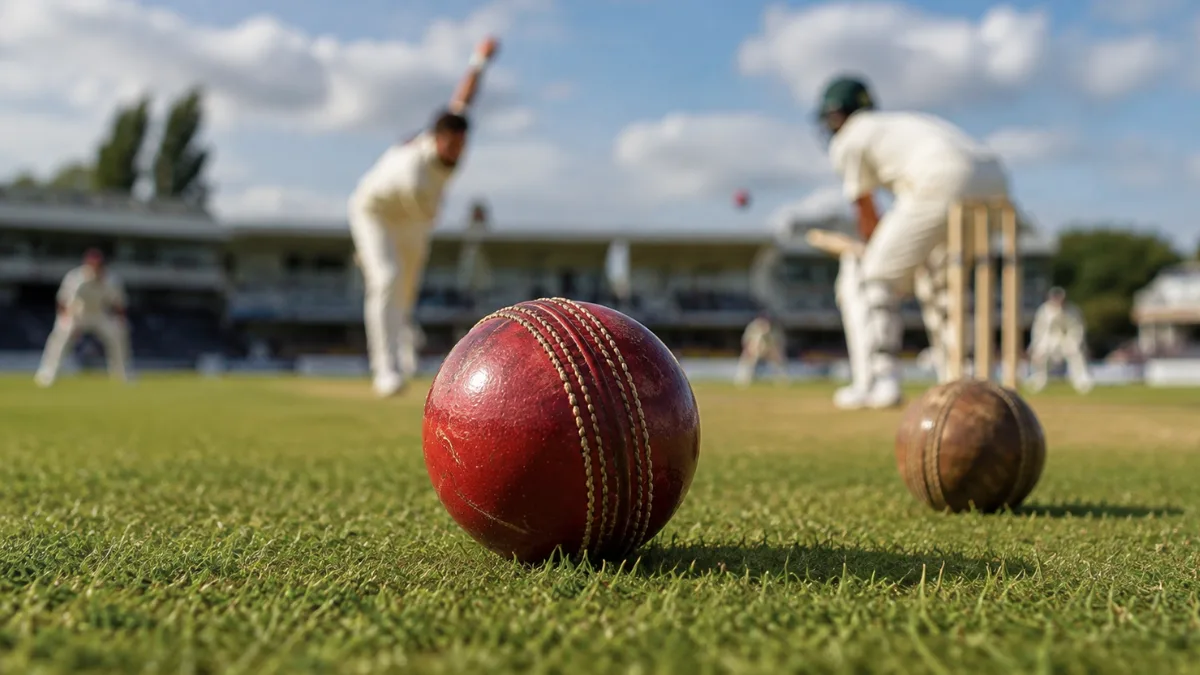

A new ball becomes available after 80 overs in Test cricket because the laws give the fielding side another ball option during a long innings. The change is not automatic or compulsory. The fielding captain can request the new ball after 80 completed overs or continue with the existing ball.
The 80-over mark creates an important tactical decision. A fresh ball may help fast bowlers find conventional swing, seam movement and extra bounce. However, an older ball may still produce reverse swing or suit the bowlers and pitch conditions better.
Is the New Ball Compulsory After 80 Overs?
No. The new ball only becomes available after at least 80 completed overs have been bowled with the existing ball.
Current ICC World Test Championship playing conditions state that the fielding captain may demand a new ball when the number of overs bowled with the old one reaches 80 or more. An unfinished part of an over does not count.
The fielding captain, or a nominated deputy acting as captain, decides whether to request it. When the new ball is taken into play, the umpire informs the other umpire and signals the change to the batters and scorers.
This is why commentators often say that the new ball is “due.” The word means it is available, not that the fielding side must take it immediately.
What Does the 80-Over Threshold Achieve?
The ICC and MCC rules establish the 80-over threshold, but they do not explain why that exact number was originally selected.
In practice, the rule allows one ball to age substantially before giving the fielding side the option to begin a new phase of the innings. It preserves the importance of old-ball skills while still allowing fast bowlers to attack with a fresh ball during a long batting innings.
The threshold therefore creates a balance between:
- Conventional swing and seam movement with a newer ball
- Reverse swing and other old-ball tactics
- The batting side’s effort to survive long spells
- The fielding captain’s need to choose the right moment
The new ball does not automatically favour the fielding team. Its effect depends on the pitch, weather, bowlers, batters and condition of the previous ball.
Why Can a New Ball Be More Dangerous?
A new ball has a firmer surface and a more prominent seam than a ball that has been used for 80 overs.
When a fast bowler presents the seam effectively and atmospheric conditions are suitable, a new or well-maintained ball can assist conventional swing. Its firmer seam may also help the ball deviate after pitching when the surface allows it.
Cricket-ball aerodynamic research shows that seam position, surface roughness, speed and airflow all affect swing. It also shows that the ball’s aerodynamic behaviour changes as its surface becomes worn.
A new ball still does not guarantee wickets. On some pitches, its hardness can make it come onto the bat more cleanly, allowing confident batters to score faster.
Why Do Captains Sometimes Delay Taking the New Ball?
Captains often delay the new ball because the existing ball remains useful.
A worn ball may produce reverse swing, particularly when bowlers have sufficient pace and maintain a difference between its two sides. Used balls can behave differently from new balls because wear changes the surface roughness and airflow around them.
A captain may also wait because:
- The current bowlers are already troubling the batters.
- The main fast bowlers need rest before starting a new spell.
- Spinners are receiving useful grip or uneven bounce.
- Conditions may improve after an interval or at the start of the next day.
- The harder ball may make scoring easier if it offers little movement.
- The captain wants the fresh ball available for a particular batter or session.
Once the captain takes the new ball, it becomes the ball in play. The fielding team cannot alternate between the new ball and the previous ball according to the bowler or match situation.
When Does Another New Ball Become Available?
The next 80-over count begins when the replacement new ball enters play.
This means another new ball does not always become available at the 160th over of the innings.
For example:
- If the captain takes the first optional new ball after 80 overs, another becomes available after 160 overs.
- If the captain waits until 87 overs, another becomes available after 167 overs.
- If the captain waits until 95 overs, another becomes available after 175 overs.
The rule counts the number of completed overs bowled with the particular ball being replaced, not fixed 80-over milestones in the innings.
This distinction matters in very long Test innings because delaying one new ball also delays eligibility for the next one.
Do 80 Overs Always Mean 480 Deliveries?
Eighty completed overs contain 480 valid balls because each over consists of six valid deliveries.
However, bowlers may deliver more than 480 balls before the scoreboard reaches 80 overs. Wides and no-balls do not count among the six valid balls required to complete an over.
An interrupted over must also be completed before it counts toward the 80-over total. If play stops at 79.4 overs, the new ball has not yet become available.
Can the Ball Be Changed Before 80 Overs?
Yes, but this is different from the captain requesting the scheduled new ball.
When a ball is lost or becomes unfit through normal play, the umpires can replace it before 80 overs. Under the general MCC law, the replacement should have wear comparable to the ball that was being used.
The fielding side does not automatically receive a brand-new ball merely because the original one becomes damaged or cannot be recovered.
Current ICC World Test Championship conditions include an additional exception. If a ball that has been used for more than 110 overs must be replaced because it is lost or judged unfit, the replacement must be a new ball. This provision is separate from the captain voluntarily requesting a new ball after 80 overs.
What Is the Second New Ball in Test Cricket?
Each innings begins with a new ball. The optional ball available after 80 overs is therefore commonly called the second new ball.
It is not connected to a particular day or session. The batting side could reach 80 overs on the first day, second day or later. Eligibility depends only on the number of completed overs bowled with the current ball.
Taking the second new ball can change the direction of a Test match. It may give fast bowlers a fresh attacking opportunity but delaying it can also be the better decision when the older ball remains effective.
Cricket commentary often turns detailed rules into convenient shorthand. Saying that the “new ball is due” does not mean the change is compulsory, just as the DRS 50% rule does not describe a literal percentage calculation.
80-Over New-Ball Rule in Simple Terms
- Every Test innings starts with a new ball.
- Another new ball becomes available after 80 completed overs.
- The fielding captain or acting deputy decides when to request it.
- The captain can continue with the old ball beyond 80 overs.
- Once the new ball enters play, the previous ball cannot be brought back for tactical use.
- The next 80-over count starts when the replacement ball enters play.
- Replacing a lost or unfit ball follows a separate process.
The 80-over mark is therefore not an automatic ball change. It gives the fielding side a strategic choice between continuing with an effective old ball and beginning a new attacking phase with a fresh one.

1 thought on “What Happens to the Ball After 80 Overs in Test Cricket?”