
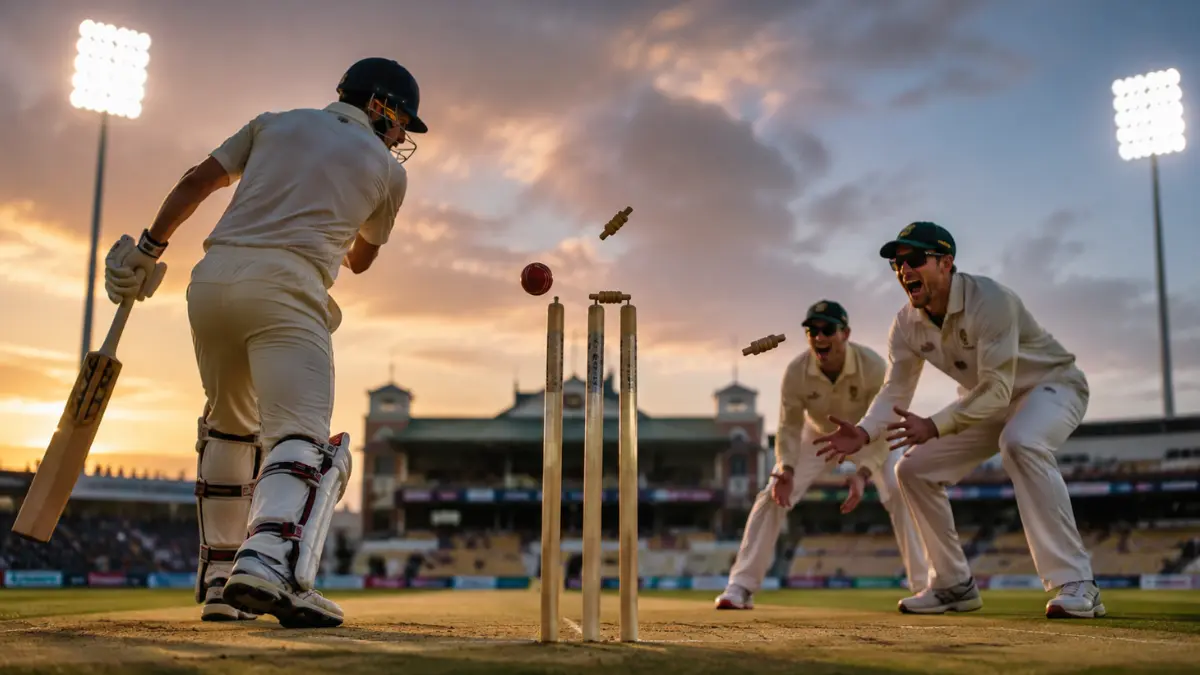

A wicket falling just before stumps can currently end a day’s play even when balls remain in the over, depending on the playing conditions governing the match. That position changes under the new MCC Laws from October 1, 2026, when the final over of the day will normally be completed after a wicket falls rather than allowing the incoming batter to wait until the following morning.
The change applies to multi-day cricket and addresses a small but important advantage that the batting side can receive when a wicket falls immediately before the close of play.
What Happens Under the Current Rule?
Under the current MCC Law 12 on the start and cessation of play, when fewer than three minutes remain before an agreed interval, that interval can begin immediately if a batter is dismissed or retires, or if the players have to leave the field. If the interruption leaves an over unfinished and the innings has not ended, the remaining deliveries are completed when play resumes.
Test cricket also operates under competition-specific playing conditions. The current ICC World Test Championship 2025–2027 Playing Conditions contain a specific end-of-day provision in Clause 12.7.7. On days other than the final day, if a wicket falls, a batter retires or the players have to leave the field during the last minimum over within three minutes of the scheduled cessation time or later, stumps are drawn. An unfinished over is then completed when play resumes.
This means a batter dismissed very close to stumps can currently leave the incoming batter waiting until the next morning rather than requiring that player to face the remaining balls immediately.
What Changes From October 1, 2026?
MCC announced a new edition of the Laws of Cricket in February 2026, with the changes coming into force on October 1, 2026. According to MCC’s official announcement of the 2026 Laws, play will continue when a wicket falls after the scheduled close of play if balls remain in the over.
Consider a batter who is dismissed on the fourth valid delivery of the final over. Under the revised MCC rule, the incoming batter will normally come to the crease and the remaining two valid balls will be bowled before the day’s play ends.
The change does not require the umpires to start another over. It only requires the over already in progress to be completed. Under MCC Law 17, an over consists of six valid balls, and deliveries called Wide or No ball do not count among those six. Therefore, more than two actual deliveries could still be required after a wicket on the fourth valid ball.
Normal provisions concerning the end of an innings or match, unsafe conditions, weather, light and other legitimate stoppages can still affect when play finishes.
Why Has MCC Changed the Final-Over Rule?
MCC says the existing arrangement can unfairly benefit the batting side. When a wicket falls immediately before stumps, the incoming batter can avoid facing the bowler and conditions that contributed to the dismissal, even though the remaining deliveries still have to be bowled the following day.
The MCC explanation of the change says the final over will therefore be fully bowled from October onwards rather than allowing the new batter to wait until the next morning.
The revised rule keeps the dismissal and the remaining part of the over within the same period of play. It also gives the fielding side an immediate opportunity to attack a new batter following a late wicket.
Does the Same Rule Apply Before Lunch or Tea?
No. The change specifically concerns the end of a day’s play, so it should not be treated as a general rule for every interval.
The current MCC provisions covering intervals include circumstances in which lunch or tea can begin when a wicket falls shortly before the scheduled interval. Those provisions remain distinct from the new rule governing the close of a day’s play.
The difference is important because the overnight interval can remove the immediate pressure on a new batter for many hours, whereas lunch and tea are normal breaks within the same day’s play.
Does the New Rule Already Apply in Test Cricket?
No. MCC has announced the rule, but the new edition does not come into force until October 1, 2026.
MCC also notes that governing bodies can adopt law changes through their own playing conditions. This means the publication of a new MCC Law does not, by itself, prove that every international or domestic competition is already applying exactly the same provision.
As of August 2026, the published ICC World Test Championship 2025–2027 Playing Conditions still contain the existing Clause 12.7.7 provision allowing stumps to be drawn following a qualifying late wicket on days other than the final day.
Competition-specific playing conditions matter in other areas of Test cricket as well. For example, the fielding side does not automatically receive a fresh ball at a fixed moment simply because an innings becomes long; the separate 80-over new-ball rule in Test cricket gives the captain an option once the relevant threshold is reached.
What Will Viewers Notice After the Rule Changes?
Once the revised MCC provision applies to a match, a wicket extremely close to stumps may no longer send both teams straight off the field.
If a batter is dismissed on the fifth valid ball of the final over, the incoming batter may need to come out and face the remaining valid delivery. A wicket on the fourth valid ball would normally leave two valid deliveries to complete.
The key point is that the wicket itself will no longer allow the batting side to postpone an unfinished final over until the next morning under the revised MCC Laws.
This is also why the exact wording of cricket rules matters. Broadcast explanations often turn complicated playing conditions into convenient shortcuts, much as the popular phrase “DRS 50% rule” is less precise than the actual ICC ball-tracking protocol.
