
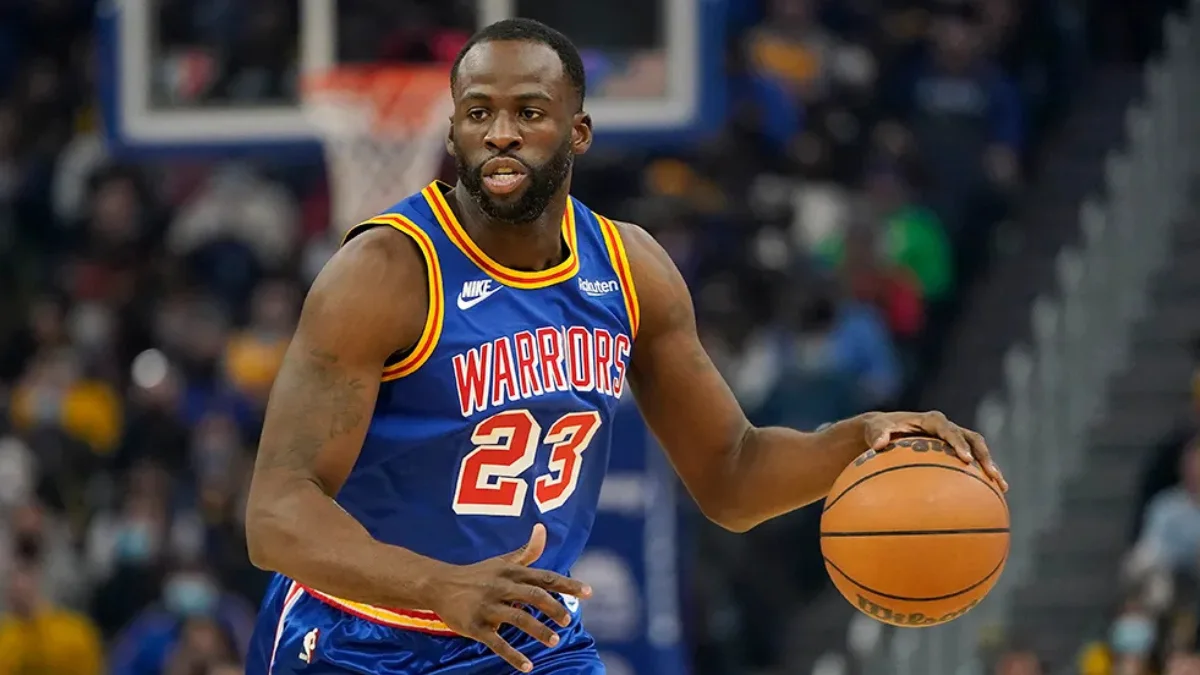

Draymond Green declined a reported $27.7 million player option and later agreed to return to the Golden State Warriors on a new one-year deal worth the same amount.
Green opted out to give Golden State more financial flexibility while the team explored a move for LeBron James. When that pursuit ended without a deal, the Warriors brought Green back at the salary he would have received by accepting his original option.
The outcome looks unusual because Green entered free agency only to return under nearly identical financial terms. However, the opt-out gave the Warriors temporary freedom to consider a different offseason plan before committing the money to Green.
What Is Draymond Green’s New Warriors Contract?
Green agreed to a reported one-year, $27.7 million contract covering the 2026–27 NBA season.
The agreement will bring him back for a 15th season with Golden State. He has spent his entire NBA career with the Warriors since the franchise selected him in the second round of the 2012 draft.
The deal does not represent a long-term extension. It covers one season and allows Green to become an unrestricted free agent again when the contract ends.
Golden State keeps an important member of its championship core without adding several years of future salary. Green receives the same reported amount that was available through his previous player option.
The new contract has not simply restored the option he declined. It is a separate agreement reached after Green entered unrestricted free agency.
That distinction explains why the process mattered even though the final salary remained unchanged.
Why Did Draymond Green Decline His Player Option?
Green declined the option mainly to give the Warriors more room to explore major roster moves.
Golden State had interest in bringing LeBron James to the Warriors. Such a move would have required the franchise to reorganize its salary commitments and make several connected decisions.
Green’s $27.7 million option represented a major part of the team’s payroll. By declining it, he gave the Warriors more freedom to examine different salary structures while they pursued James.
The decision did not show that Green wanted to leave Golden State. Reports consistently connected the opt-out to the Warriors’ offseason plans rather than a disagreement between the player and the franchise.
Green also did not immediately begin promoting himself to other teams. A return to the Warriors remained the expected outcome throughout the process.
The opt-out therefore served as a temporary financial tool. It allowed Golden State to explore whether Green could return under different terms if the team successfully added another star.
Major teams across different sports often have to balance contracts, available funds and existing squad needs before completing an ambitious signing. A similar roster-building question surrounds the reported Yan Diomande transfer to Real Madrid, where the proposed fee and remaining formalities could shape the club’s wider plans. Golden State used Green’s opt-out to create comparable short-term flexibility while exploring its own major addition.
Why Did Green Re-Sign for the Same $27.7 Million?
The Warriors did not complete the major move that had made Green’s opt-out useful.
Once the pursuit of James ended, Golden State no longer had the same reason to ask Green to accept a lower salary. The team could return to the amount already attached to his previous contract.
Green agreed to the new one-year deal for a reported $27.7 million, matching the value of the option he had declined.
That does not mean the opt-out achieved nothing. It gave the Warriors a period in which they could explore another plan without Green’s option already locking that salary into place.
The team simply did not turn that flexibility into the star addition it wanted.
Green’s new deal also confirms that his free agency was not a public breakup. He returned to the only organization he has represented, and Golden State retained the player who remains central to its defensive identity.
Did Draymond Green Lose Money by Opting Out?
Green did not lose the reported $27.7 million salary because his new contract carries the same value.
However, he temporarily surrendered the guarantee attached to his player option.
Accepting the option would have automatically kept him under his existing contract for the 2026–27 season. He would not have needed to negotiate a new agreement.
Declining it made Green an unrestricted free agent. Until the new deal emerged, he no longer had the option salary formally secured.
The final agreement removed that risk. Green returned at the same reported amount and remained with his preferred franchise.
The process suggests that Green and the Warriors expected to continue working together even while the front office explored other possibilities.
Green publicly indicated that patience had not become a problem while he remained unsigned. His comments supported the idea that both sides still expected a resolution.
Is the New Contract Exactly the Same as the Old Option?
The salary is reportedly the same, but the contract is not.
The original $27.7 million figure came from a player option in the final season of Green’s previous deal. He controlled whether that season would become guaranteed.
The new agreement is a separate one-year contract negotiated after he declined the option and entered free agency.
Both paths would pay Green the same reported salary for the same season. The legal and strategic process behind them is different.
The option would have locked Green into the existing contract immediately. The opt-out gave the Warriors time to pursue a roster change before reaching a new agreement with him.
That is why the move can make sense even though the final result appears identical on a salary sheet.
Why Did the Warriors Want Draymond Green Back?
Green remains one of the most important players in Golden State’s system even though he is not a high-volume scorer.
He averaged 8.4 points, 5.5 rebounds and 5.5 assists during the 2025–26 season. Those numbers show his all-around contribution but do not fully describe his value.
Green organizes the Warriors’ defense. He communicates switches, identifies threats, directs teammates and guards several positions.
His ability to read plays allows Golden State to react before opponents create an open shot. That awareness remains difficult to replace with one ordinary signing.
Green also plays a major role beside Stephen Curry on offense. He sets screens, handles the ball, delivers quick passes and helps Curry find space without controlling every possession.
The two players have developed that connection over more than a decade. Green often recognizes Curry’s movement before another defender or teammate reacts.
Another player might offer more scoring, size or outside shooting. Replacing Green’s combination of defensive communication, passing and familiarity with Curry would still be difficult.
Why Did Golden State Give Green Only One Year?
The one-year term limits Golden State’s long-term risk.
Green remains valuable, but the Warriors must consider his age, recent availability and offensive limitations. A longer contract would place more guaranteed money on future payrolls.
The short deal allows the franchise to keep Green for another season while reassessing the roster after 2026–27.
It also keeps Green aligned with the immediate stage of Curry’s career. Golden State can focus on the coming season without deciding today how long the championship core should remain together.
For Green, the contract preserves his full reported salary and gives him another opportunity to show that his impact remains worth a future agreement.
Neither side has committed beyond the next season. That creates flexibility, but it also means they will face another decision when the deal expires.
Could Green Have Signed With Another NBA Team?
Green became free to negotiate with other teams after declining his option.
However, no other franchise appeared to offer a situation that matched his connection with Golden State.
His value is closely tied to the Warriors’ system and his partnership with Curry. Golden State understands how to use his passing and defensive instincts while reducing the impact of his scoring limitations.
Another team would need to decide how Green would fit without the same movement offense, shooting pressure and established relationships.
Green has also made his preference for Golden State clear in the past. He helped build the Warriors’ championship era and has repeatedly spoken about wanting to remain with the organization.
The new contract follows that history. He tested free agency as part of a team-building strategy but ultimately returned without changing franchises.
What Does Green’s Return Mean for Stephen Curry?
Green’s return keeps one of Curry’s most trusted partners in the lineup.
Curry and Green have formed the foundation of Golden State’s style for years. Curry creates pressure through shooting and constant movement, while Green turns that pressure into screens, passes and defensive advantages.
Losing Green would have forced the Warriors to replace both a defensive leader and an offensive decision-maker.
Keeping him provides continuity, but it does not solve every problem on the roster.
Golden State still needs enough scoring, health, depth and athleticism to compete with younger teams. Green’s return preserves an important piece rather than completing the entire offseason plan.
The Warriors pursued a larger change when they explored adding James. After that option disappeared, they returned to the partnership they already knew.
Does the Deal Guarantee Green Will Retire With the Warriors?
No. The one-year agreement does not guarantee that Green will finish his career in Golden State.
He can become an unrestricted free agent again after the 2026–27 season.
Green has expressed a desire to remain with the Warriors, but the next decision will depend on his performance, health and the franchise’s direction.
Golden State will also need to consider Curry’s future and whether the team can continue competing around its veteran core.
The current deal postpones those questions for one season. It does not provide a permanent answer.
Green now has another year to strengthen his case for remaining with the franchise. The Warriors have another season to evaluate how much the Curry-Green partnership can still contribute.
What Did the Opt-Out Actually Achieve?
Green’s decision gave Golden State flexibility when the franchise believed it might add another star.
The Warriors could explore different salary structures without immediately carrying his player-option commitment.
The pursuit did not produce James, so Golden State returned to Green at the same reported salary.
That makes the process look circular, but the purpose was clear. The option created space for the Warriors to investigate a bigger move, not to force Green out or reduce his salary without improving the team.
When the larger plan ended, both sides chose the familiar outcome.
Green kept his $27.7 million salary. Golden State retained one of the defining players of its championship era. The one-year term also protected the team from a long commitment while giving its veteran core another season together.
Draymond Green declined $27.7 million because the Warriors wanted flexibility to chase a major addition. He accepted the same amount later because that addition did not happen, removing the main reason for him to take less.
