
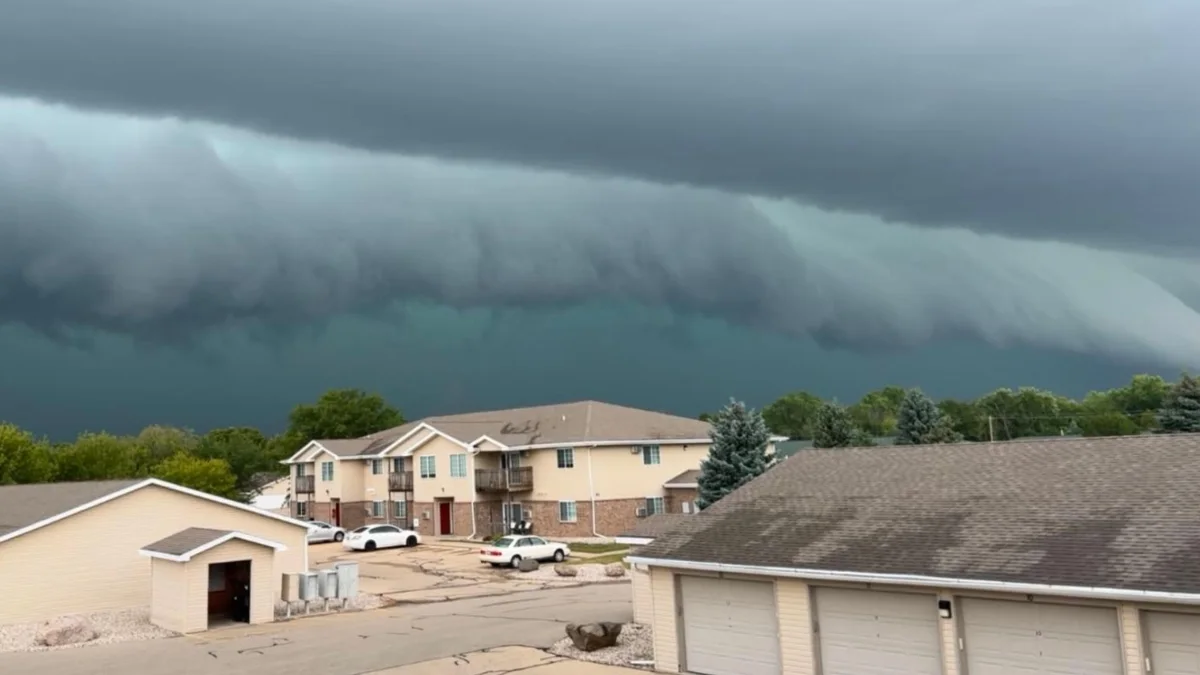

The Appleton tornado caused widespread damage across parts of north-eastern Wisconsin on July 27, 2026. The National Weather Service found at least EF2 tornado damage in Menasha, although the final rating and complete storm track remain under review.
The tornado began west-northwest of Appleton shortly before noon and moved through the Fox Cities area, damaging homes, businesses, vehicles, trees, roads and power infrastructure. Officials reported no known deaths, while a small number of people received treatment for injuries.
More than 30,000 customers initially lost electricity across the affected region. Menasha, Fox Crossing, Appleton, and nearby communities declared emergencies or introduced temporary safety measures as crews began clearing roads and assessing the destruction.
More than 30,000 customers initially lost electricity across northeastern Wisconsin after the storm.
The tornado struck on the same day a separate T-Mobile outage caused phones to show SOS mode across several parts of the United States. Officials did not report any connection between the carrier disruption and the Wisconsin storm, but both events showed how quickly access to communication can become difficult during an emergency.
Menasha’s utility believed that the entire city, with a population of approximately 18,000, had lost power shortly after the tornado.
When Did the Appleton Tornado Happen?
The National Weather Service listed the preliminary tornado start at 11:56 a.m. local time on Monday, July 27.
The starting point was approximately two miles west-northwest of Appleton. Survey teams marked both the location and time as preliminary because the investigation remained underway.
The National Weather Service issued a tornado warning at 11:59 a.m. for the Fox Cities region, including Appleton, Menasha, and Neenah. The area had already been under a severe thunderstorm warning before the tornado warning arrived.
The storm reached Menasha and the eastern side of Fox Crossing at approximately 12:20 p.m., according to local officials.
Residents and workers described the sky becoming unusually dark around midday. Thick storm clouds, heavy rain, and debris reduced the available light as the storm moved through the area.
Radar data later showed lofted debris near Menasha. That signal supported reports that a tornado was actively damaging structures and lifting material into the air.
Where Did the Tornado Cause Damage?
The storm affected several communities in the Fox Cities region but the National Weather Service specifically identified at least EF2 damage in Menasha.
Appleton reported extensive fallen trees, broken branches, blocked roads, damaged traffic signals, power failures and structural damage. Several streets became difficult to access because trees, utility lines, and debris covered the roadways.
A large industrial building in Appleton also suffered significant roof damage. City departments focused first on emergency calls, clearing road access and protecting residents from downed electrical lines.
Menasha experienced some of the most severe destruction. The tornado removed roofs, damaged exterior walls, overturned vehicles and heavily damaged homes and businesses.
A group of businesses that included a bakery, laundromat, and tavern suffered major damage. Images from the area showed overturned cars, broken buildings, snapped trees, and debris spread across streets and properties.
Fox Crossing also reported serious storm effects. Downed power lines, blocked roads, damaged buildings, and utility problems disrupted travel and emergency response.
Officials closed heavily affected areas to unnecessary traffic because congestion was preventing emergency workers and utility crews from reaching damaged neighborhoods.
Why Is It Called the Appleton Tornado?
Many reports describe the event as the Appleton tornado because the preliminary starting point was west-northwest of Appleton and the storm gained attention as it approached the city.
However, the tornado did not affect Appleton alone.
It moved through a larger area that included Menasha and Fox Crossing. The strongest damage confirmed during the initial National Weather Service survey was in Menasha.
A tornado often becomes associated with the largest or most recognizable nearby city, even when surrounding communities experience equal or greater destruction.
“Appleton tornado” remains a useful search term and public description, but “Appleton-area tornado” or “Appleton–Menasha tornado” gives a more complete picture of the affected region.
The final National Weather Service survey may provide a clearer path showing exactly where the tornado began, where it travelled, and where it ended.
How Strong Was the Appleton Tornado?
The initial survey found at least EF2 damage in Menasha.
An EF2 tornado falls within the significant category of the Enhanced Fujita Scale. EF2 damage corresponds to estimated wind speeds between 111 and 135 mph.
The complete EF scale includes:
- EF0: 65 to 85 mph
- EF1: 86 to 110 mph
- EF2: 111 to 135 mph
- EF3: 136 to 165 mph
- EF4: 166 to 200 mph
- EF5: More than 200 mph
The National Weather Service did not immediately publish a final maximum wind speed for the Appleton-area tornado.
The phrase “at least EF2” means surveyors found damage strong enough to support an EF2 classification, but they had not finished inspecting the complete path.
The final rating could remain EF2. It could also change if investigators find reliable evidence of stronger or weaker winds elsewhere along the route.
Until the survey concludes, the most accurate description is that the tornado produced at least EF2 damage in Menasha.
How Do Meteorologists Rate a Tornado?
Meteorologists usually rate a tornado by examining the damage it leaves behind.
Survey teams inspect homes, commercial buildings, trees, utility poles, vehicles, and other structures. They study how each object was built, how it failed, and how much force would have been required to produce the observed damage.
A roof removed from a weakly connected building may support a lower wind estimate than similar damage to a well-constructed building with strong connections.
Surveyors also examine whether exterior walls collapsed, how trees snapped or uprooted, and whether vehicles moved or overturned.
They compare these findings with radar data, photographs, videos, aerial images, and eyewitness reports.
This process prevents officials from assigning a rating based only on the tornado’s appearance. A large funnel does not automatically receive a high EF rating, and a smaller-looking tornado can still cause significant damage.
The rating reflects estimated wind intensity based on reliable damage indicators.
Were Any People Killed or Injured?
Officials reported no known deaths following the storm.
A small number of people received treatment for injuries. Authorities did not immediately describe those injuries as widespread or release detailed information about every affected person.
Early reports on Monday evening said no injuries had been confirmed while emergency crews were still searching damaged areas. Later local updates clarified that a few people had received treatment.
That change shows why casualty information can develop during the first hours after a major storm.
Blocked roads, fallen power lines, unstable buildings, gas leaks, and debris made some locations difficult to reach immediately after the tornado passed.
Emergency teams searched damaged buildings, checked neighborhoods, and helped residents leave unsafe areas.
Even without a high casualty count, the recovery area remained dangerous. Officials warned residents to avoid downed electrical lines, damaged structures, barricaded roads, and neighborhoods where emergency crews were working.
How Many People Lost Power?
More than 30,000 customers initially lost electricity across northeastern Wisconsin after the storm.
Menasha’s utility believed that the entire city, with a population of approximately 18,000, had lost power shortly after the tornado.
Fallen trees, damaged poles, broken lines, and problems affecting larger transmission equipment complicated restoration work.
Power-outage figures changed as crews restored service, so the initial total should not be treated as a live count.
Some homes and businesses could remain without electricity longer than others because crews must first remove hazards and repair the most severely damaged parts of the network.
Officials asked residents to treat every fallen power line as energized. People were also told not to move barricades or enter closed roads to inspect damage.
What Emergency Orders Did Officials Issue?
Menasha, Neenah, Grand Chute, and other affected communities declared local emergencies or disasters after the storm.
These declarations allowed local authorities to coordinate emergency personnel, equipment, road closures, mutual aid, and damage documentation.
Menasha and Fox Crossing announced a citywide curfew from 10 p.m. to 5 a.m. The order remained in place until further notice at the time of the update.
The curfew limited unnecessary travel through public streets and spaces while emergency and utility crews worked in hazardous areas.
Officials also closed the east side of Fox Crossing and Menasha to incoming traffic. Residents were encouraged to shelter in place and avoid travelling unless necessary.
A boil-water order applied to Fox Crossing east of the Fox River and to Menasha residents who receive water from the Fox Crossing utility.
Residents in those areas were also asked to conserve water. The order did not automatically apply to every household in Appleton or the entire surrounding region.
Where Could Displaced Residents Find Help?
Several emergency shelters opened for residents affected by the tornado and power outages.
Christ the Rock Community Church in Menasha provided overnight shelter. The Elks Lodge in Menasha and Calvary Bible Church near Neenah also offered temporary assistance during the initial emergency response.
Transportation was arranged from a former Shopko parking area for residents who could not reach the main overnight shelter independently.
The shelters provided basic assistance, water, and a safe location away from damaged neighborhoods.
Officials asked residents to follow updates from local emergency management agencies because shelter hours, road closures, water orders, and access restrictions could change as recovery work progressed.
Why Is the Final Tornado Rating Still Pending?
The National Weather Service warned that completing the damage assessment could take several days.
Survey teams must examine the tornado’s entire path rather than only the most dramatic damage location. Blocked roads, fallen lines, debris, and unsafe structures can slow access.
Investigators also need time to separate tornado damage from damage caused by straight-line thunderstorm winds.
The broader storm system produced several supercells, damaging wind, and very large hail across parts of Wisconsin. Not every broken tree or damaged roof necessarily came from the tornado itself.
Surveyors must connect confirmed damage points to establish the tornado’s path length, maximum width, direction, start point, and ending point.
They must also find the strongest reliable damage indicator before assigning a final EF rating and maximum estimated wind speed.
Until those steps are complete, reports should continue to describe the Appleton-area tornado rating as preliminary.
What Happens Next in Appleton and Menasha?
Emergency crews and utility workers will continue clearing roads, removing hazards, restoring power and checking damaged properties.
Local governments will document damage and update residents about closures, curfews, shelters and water restrictions.
The National Weather Service will continue its survey and may release additional information about the tornado’s path, duration, width, wind speed and final rating.
Residents should rely on local authorities for immediate safety instructions and the National Weather Service for the final scientific assessment.
The confirmed facts already show that the storm caused severe damage across the Fox Cities region. It began near Appleton, produced at least EF2 damage in Menasha, disrupted electricity and transportation, and forced several communities to begin a major emergency response.
