
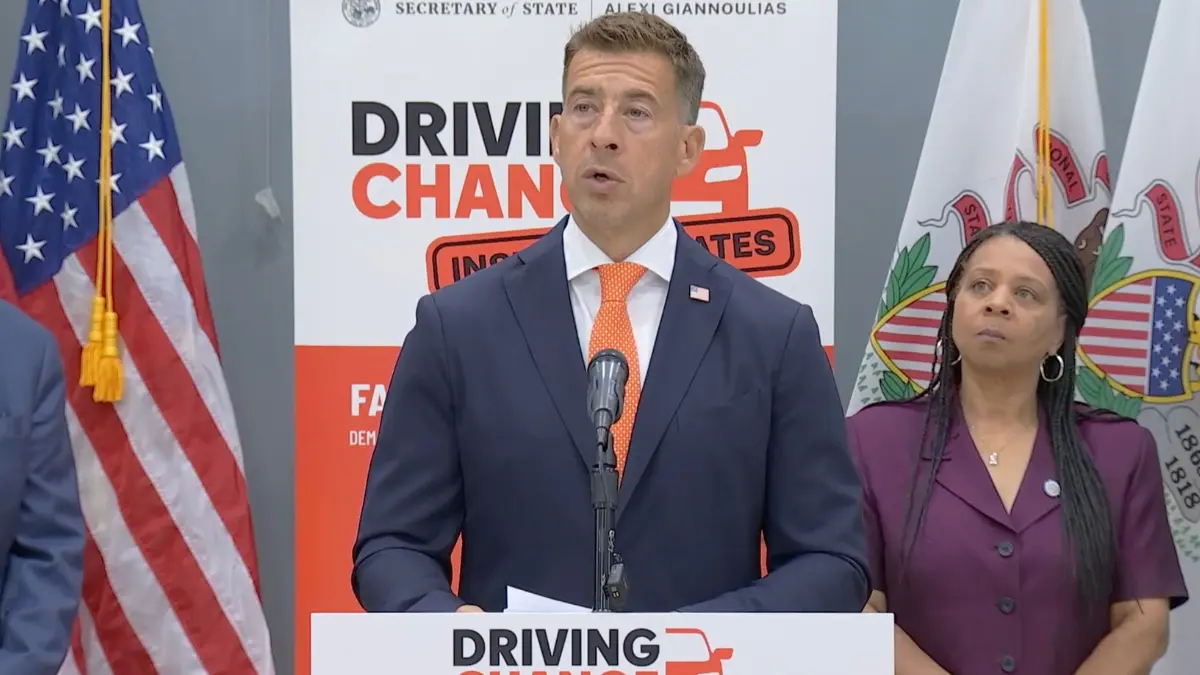

Alexi Giannoulias says he would hire 1,000 additional Chicago police officers by 2030 and restore ShotSpotter if elected mayor. The proposal would expand police recruitment and reverse Chicago’s decision to end its previous gunshot-detection contract, but Giannoulias has not yet released a complete funding or implementation plan.
Giannoulias introduced the public-safety proposals while launching his campaign for the 2027 Chicago mayoral election. His position creates a clear contrast with Mayor Brandon Johnson, whose administration ended Chicago’s use of ShotSpotter in 2024.
Giannoulias is also seeking reelection as Illinois secretary of state, raising a separate question about whether Alexi Giannoulias can run for two offices.
What Has Alexi Giannoulias Promised?
Giannoulias wants Chicago to hire 1,000 additional police officers by 2030. He also wants the city to restore ShotSpotter or return to a similar form of acoustic gunfire-detection technology.
The 2030 deadline suggests that Chicago would spread the recruitment effort across several years. However, Giannoulias has not explained how many officers the city would hire annually or which police units would receive the additional personnel.
He has also not released a projected cost or identified how Chicago would pay for the expansion.
The proposal would require more than hiring new recruits. Chicago would need enough qualified applicants, academy instructors, training capacity, equipment and supervisors to support a larger workforce.
Would Chicago Gain 1,000 More Active Officers?
Hiring 1,000 officers would not necessarily increase the Chicago Police Department’s total workforce by the same number.
The net increase would depend on how many officers retire, resign or otherwise leave during the recruitment period. Some new officers may fill existing vacancies or replace personnel who depart before 2030.
The final staffing effect would also depend on whether Chicago expands its police academy capacity and moves officers out of administrative roles that civilian employees could perform.
Giannoulias would need to show whether his promise represents 1,000 hires in total or a net addition of 1,000 officers after accounting for departures.
The cost would extend beyond salaries. Each officer would create expenses involving training, equipment, benefits, supervision and long-term pension obligations.
What Would Restoring ShotSpotter Involve?
ShotSpotter uses acoustic sensors to identify sounds that may be gunfire. The system sends a possible shooting location to emergency dispatchers, allowing officers and medical responders to investigate.
Chicago stopped using the service after Johnson declined to extend the city’s contract with SoundThinking, the company that operates ShotSpotter.
Giannoulias has said he wants the technology restored, but he has not clarified whether he would bring back SoundThinking or use another provider.
Chicago already has an active procurement process for replacement gunshot-detection technology. City officials said in March 2026 that testing had taken place and that the proposed software remained under procurement review.
A future Giannoulias administration could therefore inherit a selected replacement system, an incomplete procurement process or a decision that still requires further review.
Giannoulias would need to decide whether to continue that process, select another provider or attempt to restore the previous ShotSpotter service.
Why Does ShotSpotter Remain Controversial?
Supporters say acoustic detection can alert authorities when nobody calls 911. They argue that faster notifications may help police and medical responders find shooting victims, secure scenes and collect evidence sooner.
Critics question whether those benefits justify the technology’s cost. A Chicago inspector general analysis found that police responses to ShotSpotter alerts rarely produced documented evidence of a gun-related crime, firearm recovery or investigatory stop during the period examined.
Critics also argue that inaccurate alerts can send more officers into neighbourhoods already experiencing heavy police activity.
Restoring the system would reopen debates about accuracy, spending and how officers respond to automated alerts. Giannoulias would need to establish clear performance standards and explain how Chicago would measure whether the technology improves emergency response.
How Does the Plan Differ From Brandon Johnson’s Policy?
The clearest difference involves gunshot-detection technology.
Johnson ended Chicago’s previous ShotSpotter agreement and moved the city toward considering replacement systems. Giannoulias wants to restore acoustic gunfire detection and connect it to a broader expansion of police staffing.
However, a mayoral campaign promise cannot implement either proposal by itself.
Giannoulias would need approved funding, a completed city procurement process and an operational plan before Chicago could add officers or launch a gunfire-detection system.
What Details Are Still Missing?
Giannoulias has presented a clear public-safety direction, but several important details remain unanswered.
He must explain the annual recruitment schedule, total projected cost and funding source. He must also clarify whether the 1,000-officer promise refers to total hires or a net increase after retirements and resignations.
His campaign must also say whether restoring ShotSpotter means bringing back the original service or supporting another acoustic detection provider.
For now, Giannoulias’s plan would move Chicago toward more police recruitment and renewed use of gunfire-detection technology. Its actual effect would depend on funding, recruitment results, staffing losses, procurement decisions and the standards used to measure whether the system improves public safety.
