
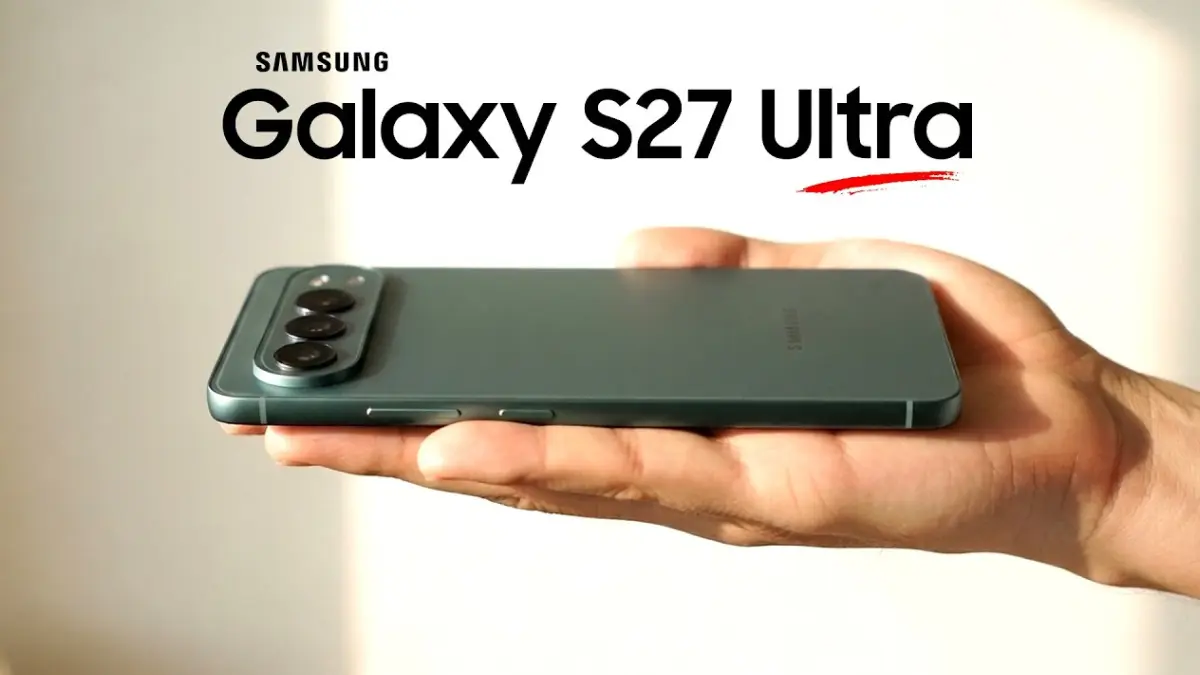

The latest Samsung Galaxy S27 Ultra battery leak suggests that Samsung is testing a 5,534mAh rated cell for its next Ultra flagship. Based on the way Samsung labels battery capacity, the company could market the phone with a typical capacity of about 5,700mAh, with 5,800mAh also possible.
Samsung has not announced the Galaxy S27 Ultra or confirmed its final battery specifications. The leaked figure should therefore be treated as an early development detail, not an official product promise.
What Does the Galaxy S27 Ultra Battery Leak Reveal?
The leak points to a 5,534mAh rated battery, which could become a 5,700mAh advertised capacity when the Galaxy S27 Ultra reaches the market.
That would mark a clear increase over the Galaxy S26 Ultra, which Samsung officially lists with a 5,000mAh typical battery and a 4,855mAh rated capacity.
The comparison matters because rated and typical capacity describe the same battery in different ways. Rated capacity represents the guaranteed minimum under defined conditions, while typical capacity reflects the average figure manufacturers normally promote.
The leaked 5,534mAh figure therefore should not be compared directly with the S26 Ultra’s advertised 5,000mAh number. A fair comparison uses either rated capacity against rated capacity or typical capacity against typical capacity.
Using the rated figures, the possible Galaxy S27 Ultra battery would be about 14 percent larger than the S26 Ultra battery. If Samsung advertises it as 5,700mAh, the typical-capacity increase would also be about 14 percent.
That would be large enough to count as a meaningful hardware upgrade rather than a minor change.
Why Is the 5,534mAh Figure More Important Than Earlier Rumours?
Earlier Galaxy S27 Ultra battery rumours mentioned several possible capacities, including numbers above 5,500mAh and claims that Samsung was evaluating different cells.
The new leak is more useful because it provides a precise rated-capacity figure rather than a broad prediction. A specific number such as 5,534mAh looks more like information connected to an actual component than a general estimate about Samsung’s plans.
That does not make the figure final. Samsung can test multiple batteries during development, and the company can change components before mass production.
However, the leak gives a more credible direction for the phone. It suggests Samsung is not merely considering a small battery increase. The company appears to be testing a cell that would create a noticeable capacity gap between the Galaxy S27 Ultra and its predecessor.
The figure also fits Samsung’s usual difference between rated and typical capacity. The Galaxy S26 Ultra carries a 4,855mAh rated battery but appears in marketing with a 5,000mAh typical capacity. A 5,534mAh rated cell could reasonably lead to a typical figure near 5,700mAh.
The possibility of a 5,800mAh label remains open, but 5,700mAh is the safer estimate until stronger documentation appears.
How Much Better Could Galaxy S27 Ultra Battery Life Become?
A larger battery gives the Galaxy S27 Ultra more stored energy, but it does not guarantee a matching increase in real-world battery life.
A 14 percent capacity increase does not automatically mean the phone will last 14 percent longer. The final result will depend on the processor, display, modem, software, camera processing, cooling system and background features.
Samsung could use the extra capacity in several ways.
The company could focus on longer screen time and improved standby endurance. It could also allow the processor to maintain higher performance for longer periods without reducing power as aggressively.
A brighter display, more demanding artificial intelligence features or heavier camera processing could consume part of the additional energy. Samsung may also change the phone’s thermal limits, connectivity hardware or display behaviour.
Network conditions will also affect real-world endurance. A phone that repeatedly switches between mobile data and an unstable wireless connection may use more power while reconnecting and searching for a stronger signal. Users who face frequent connection problems can also check the hidden reasons home Wi-Fi keeps dropping before assuming that poor battery life comes entirely from the phone.
Even with those variables, a larger physical battery would give Samsung more room to improve endurance than software optimisation alone.
Users who rely on navigation, mobile data, video recording, gaming or long camera sessions would benefit most if Samsung combines the larger battery with an efficient processor and well-tuned software.
The leak therefore supports the possibility of better battery life, but it does not reveal the number of hours users will gain.
Does the Leak Confirm a Silicon-Carbon Battery?
No. The capacity figure does not directly confirm the Galaxy S27 Ultra’s battery chemistry.
The larger cell has strengthened speculation that Samsung may use silicon-carbon technology. Silicon-carbon batteries can offer higher energy density, which helps manufacturers fit more capacity into a similar amount of space.
That explanation would make sense if Samsung plans to increase battery capacity without making the phone significantly thicker.
However, Samsung could also create room through internal redesign, component changes or a slightly different body. A higher capacity alone does not prove which method the company selected.
The leak should therefore support only a cautious conclusion: the 5,534mAh figure may indicate a higher-density battery design, but Samsung has not confirmed silicon-carbon technology for the Galaxy S27 Ultra.
Treating the chemistry as confirmed would turn a specific battery-capacity leak into a broader claim that the available evidence does not fully establish.
Will the Galaxy S27 Ultra Become Thicker or Heavier?
The battery leak does not reveal the phone’s thickness or weight.
A larger battery normally requires more physical space unless the manufacturer increases energy density. Samsung could redesign the internal layout, reduce the space used by another component or adopt a denser battery structure.
The Galaxy S27 Ultra also needs space for its cameras, cooling system, wireless-charging hardware, processor and S Pen components. Any major battery increase must fit around those parts.
Samsung could keep a similar body by changing the arrangement inside the phone. It could also accept a small increase in thickness or weight to deliver better endurance.
No reliable measurement linked to this battery report confirms which option Samsung has chosen.
Claims that the S27 Ultra will be thinner, lighter or heavier should therefore remain separate from this story. The only strong point from the current leak is the reported cell capacity.
What Is the Difference Between Rated and Typical Capacity?
Battery specifications often look inconsistent because manufacturers publish two numbers for the same cell.
Rated capacity is the minimum amount of charge that the battery is expected to provide under a defined test. Typical capacity is the average value measured across battery samples and usually appears as the larger marketing number.
Samsung’s official Galaxy S26 Ultra specifications show this difference clearly. The phone has a 4,855mAh rated capacity and a 5,000mAh typical capacity.
The leaked Galaxy S27 Ultra number follows the same pattern.
A 5,534mAh rated capacity could translate into an advertised typical capacity near 5,700mAh. The final gap will depend on Samsung’s testing and the exact production cell.
This is why reports may describe the same possible S27 Ultra battery as either 5,534mAh or 5,700mAh. Those figures are not necessarily contradictory.
The 5,534mAh number describes the reported rated cell. The 5,700mAh number describes the likely typical capacity that Samsung could present to buyers.
Until Samsung publishes official specifications, the rated figure remains the more concrete part of the leak.
Does the Battery Leak Reveal the Charging Speed?
No. Battery capacity and charging speed are separate specifications.
A phone can have a larger battery without supporting faster charging. Samsung could retain the same charging system, raise the maximum wattage or change the charging curve without altering the headline capacity.
The total charging time also depends on heat management and how long the phone can maintain higher power. Smartphones normally reduce charging speed as the battery approaches full capacity.
The current leak does not provide reliable evidence about the Galaxy S27 Ultra’s wired or wireless charging speed.
Reports that attach a specific wattage to this battery story go beyond what the capacity figure proves. Samsung may change charging performance, but that question requires separate evidence.
Keeping the two issues separate gives readers a clearer answer. The leak suggests a larger battery. It does not confirm how quickly that battery will recharge.
Could Samsung Change the Battery Before Launch?
Yes. The Galaxy S27 Ultra remains under development, and Samsung can revise the battery before the phone enters production.
Manufacturers often test several component options. A battery can change because of safety testing, durability targets, internal-space limits, heat performance, supply conditions or certification requirements.
The reported 5,534mAh cell may become the final choice, but the leak does not guarantee that outcome.
Samsung could keep the same rated capacity, adjust it slightly or select another cell. The company could also market the final battery as 5,700mAh or use a nearby typical-capacity figure.
This uncertainty does not make the leak meaningless. It simply defines how the information should be presented.
The accurate wording is that the Galaxy S27 Ultra is reportedly being developed with a 5,534mAh rated battery. It is not accurate to say Samsung has officially confirmed a 5,700mAh battery.
Is This a Meaningful Upgrade Over the Galaxy S26 Ultra?
Yes, the reported capacity would represent a meaningful upgrade if Samsung uses it in the final phone.
The Galaxy S26 Ultra officially carries a 5,000mAh typical battery. A move to approximately 5,700mAh would add about 700mAh, or roughly 14 percent.
That increase would give Samsung more room to improve daily endurance, support demanding hardware and reduce battery anxiety during heavy use.
The larger capacity would matter most if Samsung also improves processor and modem efficiency. Strong hardware efficiency could turn the extra energy into longer practical use rather than simply offsetting new features.
The leak does not confirm final battery life, charging speed, thickness, weight or battery chemistry. It also does not guarantee that Samsung will keep the same cell through production.
The strongest conclusion remains focused: Samsung appears to be testing a substantially larger battery for the Galaxy S27 Ultra, and the 5,534mAh rated figure points to a likely marketed capacity of around 5,700mAh.
